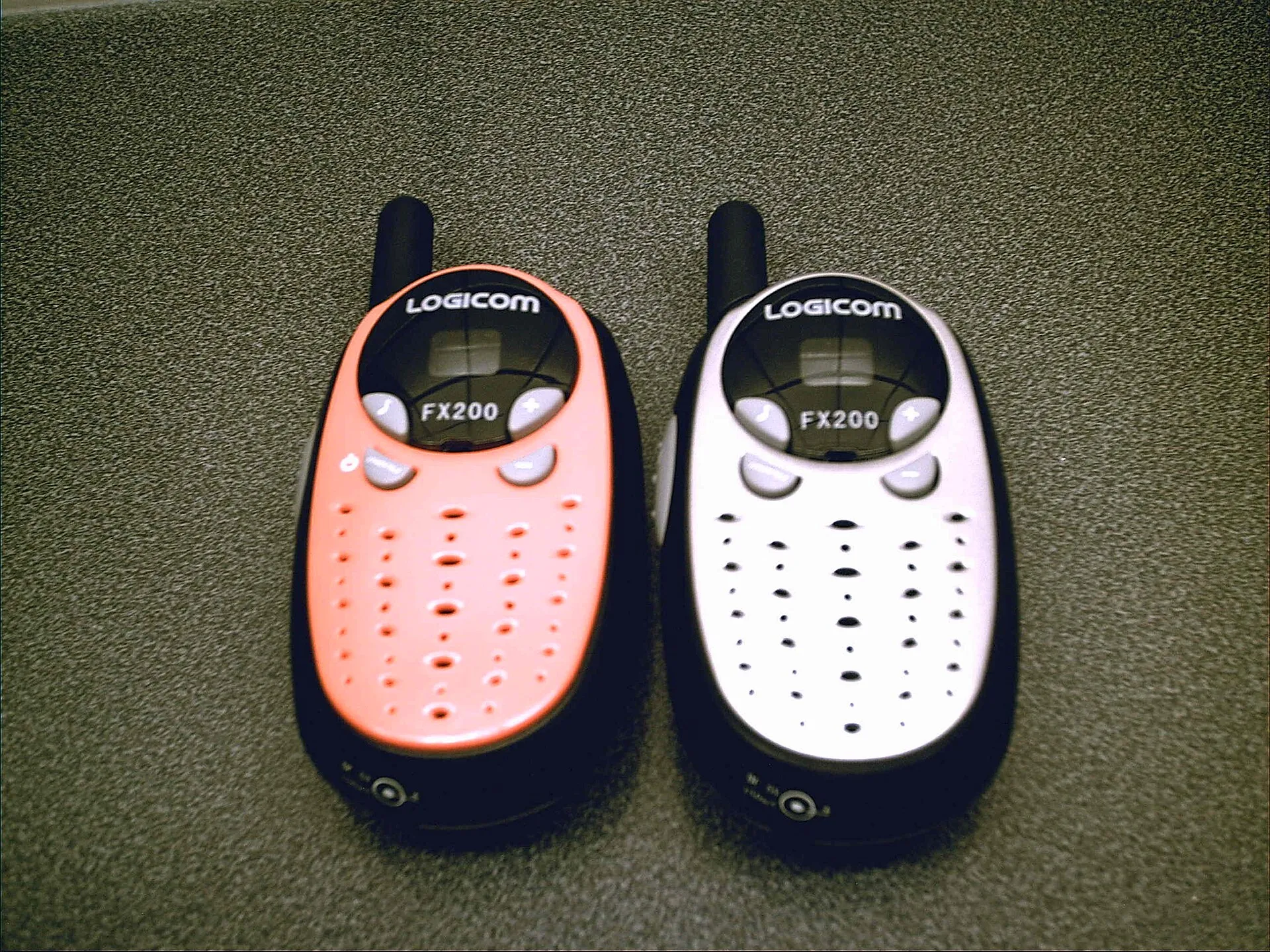
PMR446 handsets are walkie-talkies. Use them to keep in touch with people in your own group who have a handset too, when phones and broadband are not working. For an emergency, call 999.
What to do
Agree the plan before you need it. A handset only reaches people who have one switched on and set to the same channel, so everything depends on the group agreeing in advance.
-
Agree one channel
Analogue PMR446 handsets have 16 channels, so pick one number and stick to it.
-
Agree a time to check in
For example, on the hour. Nobody is promised to be listening at other times.
-
Write both on a card
Keep the card with the handsets, along with the phone numbers of everyone in the group.
-
Try the handsets together
Do it on an ordinary day, so you know they work and everyone knows how to change channel.
-
Keep them charged
Put the handsets on charge when you hear a warning, not after the power has gone.
A worked example
Four households in a village agree channel 3 and a check-in on the hour. When the power goes off, each household switches its handset on at the next hour. One person calls, and the others answer in turn. If a household does not answer, the others try again at the next check-in. If there is still no answer, someone calls round in person: see checking on a neighbour.
No distance is promised for a handset, so this guide gives none. Agree your check-in with people you can reach on foot.
What a handset does and does not do
This diagram in words
Your handset talks directly to another PMR446 handset that is switched on and set to the same channel. The rules do not allow a handset to act as a base station or repeater, so nothing in between passes your call on.
- It does not connect you to the emergency services. Call 999 from a phone. The exemption regulations do not give PMR446 any emergency status.
- It does not pass your call on. Handsets must not be used as part of an infrastructure network or as a repeater.
- It does not mean someone is listening. That is what the check-in time is for.
Choosing handsets
- Look for PMR446 on the pack.
- Buy handsets of the same type, ideally as one set, so they use the same channels.
- Leave the handset as it comes. A PMR446 handset is hand portable and uses an integral antenna only. If one is modified, for example by adding an antenna connector, it must still stay within the permitted levels.
The rules in short
It is unlawful to use radio equipment except under a licence or an exemption. PMR446 has an exemption: the Wireless Telegraphy (Exemption) Regulations 2003 include a PMR 446 schedule, and apparatus that complies with the Ofcom requirement it names is exempt from needing a licence. Ofcom says compliant PMR446 equipment may be used on a licence-exempt basis, and must be used on a mobile basis only. Its information sheet gives analogue PMR446 sixteen 12.5 kHz channels between 446.0 and 446.2 MHz, at 0.5 W ERP.
The exemption depends on the handset meeting the requirement, and on it not causing undue interference to other radio. The regulations do not mention emergencies.
The general rule for all licence-free radio is in talking when the networks are down.
Troubleshooting: you cannot hear each other
- Check that every handset is switched on, charged and set to the same channel on your card.
- If nothing works, go back to the phone numbers on your card, or call round in person.
Goes with
Sources
- Wireless Telegraphy Act 2006, section 8
- The Wireless Telegraphy (Exemption) Regulations 2003, regulation 4 and Schedule 7
- The Wireless Telegraphy (Exemption) Regulations 2003, regulation 5
- The Wireless Telegraphy (Exemption) (Amendment) Regulations 2008
- The Wireless Telegraphy (Exemption) Regulations 2021
- Ofcom, Analogue and Digital PMR446 information sheet (February 2018, read by HQ, 26 October 2026)
- Ofcom, IR 2030 Licence Exempt Short Range Devices (SRDs), published 23 October 2026, entry IR2030/34 (read by HQ, 26 October 2026)
- Kenwood Communications UK, License-free analogue PMR446 (a maker, on how its handsets work)
- Photo: two PMR446 handsets, Tellyaddict, Wikimedia Commons, public domain