If an older relative lives alone and you are not close by, you cannot sort a problem out yourself. What you can do is set things up before it happens, and agree who will check in. This guide gives you three jobs to start with, then the detail behind each.
Three jobs to start with
-
Talk to them about extra help, then register them
Tell them what you plan to do and what it means. The register is a list their energy companies keep, so the company will contact your relative to confirm their details.
-
Check their phone and their alarm
Ask how the alarm and the landline would work in a power cut, and whether the phone line is due to move to digital. Details are below.
-
Agree who checks on them
Choose a neighbour or someone close by, swap numbers, and agree what happens if you cannot get through.
The steps for the register are in the Priority Services Register guide. For the neighbour, see checking on a neighbour.
If you think your relative is in immediate danger, call 999. This applies in all four nations.
Register them for extra help
In England, Scotland and Wales this is the Priority Services Register. Ofgem says you can ask to join if you have reached state pension age, or if you live with a disability or a long-term medical condition, including a condition that means you need medical equipment that requires a power supply. Both the supplier and the network operator keep a register.
thepsr.co.uk says family members and carers can register someone on their behalf, and that the person is then contacted to confirm their details are accurate and up to date. That is why you talk to your relative first. It is free to join, according to thepsr.co.uk and Be Ready.
Ofgem lists two things that help when you live far away:
- A password scheme, for when someone needs to visit or contact them, so they can feel confident the person is genuine.
- A nominee. Your relative can nominate someone, for example a family member, to receive communications and bills from the supplier.
In Northern Ireland the equivalents are called Customer Care Registers. nidirect says you can sign up to a Care Register if you or someone in your home depends on a water supply or electrical equipment for daily care. NI Water also offers free extra services to older consumers, including a password scheme, and lets your relative name a carer or relative it can contact. The Priority Services Register guide lists who to contact in each nation.
What to have in their home
Most of this is on Be Ready’s checklist. Build it up over time. You don’t need to do it all at once.
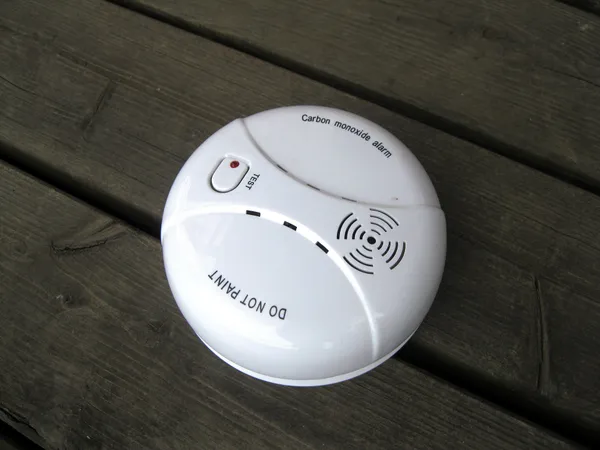
For one person, 3 litres a day for 3 days is 9 litres. That sum is ours, from Be Ready’s figures. The full kit list is in preparing for power cuts, and the alarm advice is in the carbon monoxide alarms guide.
Medicines and equipment that need power
Be Ready says that if someone uses medical equipment that needs a power supply, they should make a plan with their care provider or clinical team about what will happen in a power cut. The plan should say what they do and who they contact. Ask your relative whether they have one.
| Equipment | What the sources say | What to ask |
|---|---|---|
| Medicines kept in the fridge | Citizens Advice says the longer the door stays closed, the longer the fridge stays cold. It suggests a mini-fridge used only for medication, or keeping some medication at a family or friend’s house nearby. | Their pharmacist or doctor, or the leaflet: how a change in temperature affects the medicine. |
| Home oxygen | A concentrator switches off in a power cut, and a back-up cylinder gives a limited time. A home oxygen supplier says to tell the electricity provider that you depend on it. | Their oxygen supplier: how long their back-up lasts. Then tell their electricity supplier. |
| Powered mattress | Ask the equipment supplier or community nurse how long it holds air in a power cut, and what to do. | Their equipment supplier or community nurse: how long theirs holds air. |
| Stairlift | A stairlift maker says its lift is battery powered and keeps working for a number of return journeys. Electricity North West says to check it has a handle for moving it by hand to ground level. | The supplier: how many journeys the battery gives, and whether there is a handle. |
| Personal alarm | Citizens Advice says the back-up battery usually lasts from 24 to 48 hours. | The alarm provider. See the next section. |
In Northern Ireland, nidirect says a Care Register is of particular benefit to people who rely on equipment such as oxygen concentrators, home dialysis machines and vital signs monitoring equipment. If your relative lives in a flat or sheltered housing, ask the landlord what happens to lifts and lighting. One housing association tells residents of its retirement communities that lifts will not operate and communal areas have back-up lighting for up to three hours. That is its own building, not a rule for all.
Keeping warm
Be Ready lists older adults, people at risk of falls and people who live alone and may be unable to care for themselves among those most at risk from the cold. It says to try to heat the rooms they spend most time in, such as the living room or bedroom, to at least 18°C. The snow, ice and frozen pipes guide has each nation’s advice on room temperatures.
Be Ready also says to plan ahead so they have enough medication and food if it is harder to leave the house, and to think about who could pick them up. Name that person with your relative, and let them know.
In a power cut, gas boilers, heat pumps and home internet do not work without power, says Be Ready. It advises blankets and layered clothing, closing the doors of unused rooms and drawing the curtains. Citizens Advice suggests planning whether your relative would stay at home or stay with a friend or family member if it is safer or warmer, and checking whether the local council has any warm spaces.
The signs of hypothermia, from the NHS, are shivering; pale, cold and dry skin; slurred speech; slow breathing; and tiredness or confusion. The NHS says it is a medical emergency: go to A&E or call 999, and do not drive to A&E. It also says older people living alone in a cold house are particularly at risk. If you think your relative has hypothermia, call 999.
Keeping cool
In hot weather, nidirect says older people living on their own should be visited daily to check they are well, and that they should stay in the coolest rooms of the house. If you suspect heatstroke, call 999 immediately. The heatwaves at home guide has the advice for every nation.
Telecare, pendant alarms and the landline
Be Ready says that if someone has a personal alarm, also called a telecare device, they should speak to the device provider or manufacturer to understand how it will work in a power cut. Do this for your relative, and ask the questions in the box below.
This diagram in words
A worn pendant has a battery that Citizens Advice says usually lasts 12 months. It sends the signal to an alarm phone system, whose back-up battery usually lasts from 24 to 48 hours. The call then goes through the phone line. On a digital line that means a router, and GOV.UK says handsets and routers must be powered from home, so they will not work in a power cut without a back-up. An alarm connected to wifi will not work if the internet has no power.
Citizens Advice adds that a pendant linked to a phone works only if the phone has battery, and that a wifi-connected alarm will not work if the internet loses power. It says the alarm company should work with you to find a solution.
The digital phone switch
Landlines are moving from the old copper network to digital lines that run through a router.
- GOV.UK says that analogue corded handsets keep working in a local power cut as long as the telephone exchange still has power. Digital landlines cannot carry a power connection, so they will not work in a power cut unless there is a back-up such as a battery.
- GOV.UK says most customers are expected to have made the switch by the end of January 2027, and that not all analogue services will be switched off by 2027, depending on the provider. Openreach says that after 31 January 2027 all traditional phone lines will be going digital, and that anyone who has not switched may have a limited service.
- GOV.UK says telecare devices on a digital line may not work in a power cut. It says alarm systems and telecare devices may need an upgrade, their own battery and network back-up, or an adaptor.
- The government’s telecare plan for England says telecare users should only be switched to digital if the communication provider, the customer, the telecare supplier or the telecare service provider confirm they have working telecare in place.
Openreach says that if you rely on your landline, have poor mobile signal or use telecare, you should speak to your provider as soon as possible. GOV.UK says to tell your provider if you or a relative are a vulnerable consumer.
The free back-up battery. Be Ready says a telecare user, as a vulnerable customer, must be given a free back-up battery unit by their communication provider, so the landline works for at least an hour. GOV.UK says units typically last between 4 and 7 hours. The one hour is about calls to 999. The government’s telecare plan says there is no regulatory requirement for providers to keep telecare calls working, because telecare devices do not dial 999. So ask the alarm provider, not just the phone company.
Questions for the providers. When will your relative’s line move to digital? Will they get a battery back-up unit, and how long does it last? Will the alarm work on a digital line, and what happens to it in a power cut?
If they have no mobile. GOV.UK says telecoms companies recommend a mobile as the back-up. If there is no mobile or no signal at home, the landline provider should offer a solution such as a battery back-up unit. Be Ready also warns that a mobile might stop working if the local mast is in the affected area. For more on phones in a power cut, see keeping your phone going.
Arrange a local contact
Be Ready suggests agreeing a backup plan with anyone who might need extra support, particularly if they live alone. You could agree that if an outage happens and you cannot call, you or another trusted person they know will visit them in person. It also says you can speak to the neighbours of anyone you would be worried about and agree that they go round to check.
Citizens Advice says it is good to have a neighbour or someone close by who can come and check on you, especially if you have no mobile phone.
Agree these things with your relative and the person nearby:
- Numbers. Swap contact details, as Be Ready suggests. Your relative keeps a paper copy of important numbers.
- When you will call. In cold weather, Be Ready says to check how people are feeling and offer practical help, such as getting food or medication. In hot weather, nidirect says to visit older people living alone daily. Choose a time that suits your relative.
- What happens if they don’t answer. Who goes round, and who you ring next.
The household plan is a place to write it down.
If you cannot reach them
Ring the neighbour or contact you agreed. That is what the plan is for. If you think your relative is in immediate danger, call 999, as Be Ready says.
Who to call, by nation
| Nation | Power cut | Health advice that is not an emergency | Advice for older people and their families |
|---|---|---|---|
| England | 105, free | NHS 111, free from landlines and mobiles | Age UK Advice Line, 0800 678 1602, 8am to 7pm every day |
| Scotland | 105, free | NHS 24, 111, free | Age Scotland helpline, 0800 12 44 222, Monday to Friday, 9am to 1pm |
| Wales | 105, free | NHS 111 Wales, 111, free from landlines and mobiles | Age Cymru Advice, 0300 303 44 98, Monday to Friday, 9am to 4pm |
| Northern Ireland | NIE Networks, 03457 643 643 | GP out of hours: phone first. Numbers by area are on nidirect | Age NI Advice Line, 0808 808 7575, Monday to Friday, 9am to 5pm |
In all four nations, call 999 in an emergency. In Northern Ireland, nidirect says to phone 999 and ask for the ambulance service if the situation is critical or life-threatening, and that the GP out-of-hours service is for people who cannot wait until their surgery opens, including frail elderly people. It runs from 6.00pm on weekdays until the surgery opens, and all day on Saturday, Sunday and public holidays.
For your relative’s local council, including any warm spaces, Citizens Advice points to GOV.UK’s find-your-council service.
Troubleshooting
They don’t have a mobile phone
Talk with them, and with friends and family, about what should happen in a power cut, as Citizens Advice says. Have someone close by who can come and check. Ask the landline provider about a battery back-up unit, as GOV.UK says it should offer one if there is no mobile or no signal.
Their alarm is connected to wifi
Citizens Advice says a wifi-connected alarm will not work if the internet has no power, and that the personal alarm company should work with you to find a solution. Ask the company before a power cut, not during one.
They live in a flat or sheltered housing
Ask the landlord or managing agent what lifts, door entry and communal lighting do in a power cut. One housing association says lifts will not operate and should not be used in a power cut, and that its main entrance doors will open. That is its policy for its own buildings. If your relative uses a lift or a stairlift to get in or out, make a plan with them for when it does not work.
You are not sure they qualify for the register
Ask. Ofgem’s list includes people who have reached state pension age, and people whose circumstances have recently changed, for example after a stay in hospital or a bereavement. If your relative is in Northern Ireland, ask NIE Networks and NI Water about their Customer Care Registers.
The phone line is going digital and they have a care alarm
Tell the phone provider and the alarm provider now. GOV.UK says to contact your provider or equipment manufacturer if you have alarm systems or telecare devices on the line. The end of January 2027 is the date GOV.UK gives for most customers.
Sources
- Ofgem: Join your supplier’s Priority Services Register
- The PSR (thepsr.co.uk): home page
- The PSR (thepsr.co.uk): The Priority Services Register promise
- nidirect: Care registers
- Northern Ireland Water: Customer Care Register
- Be Ready: Power cuts
- Be Ready: Be ready for emergencies
- Be Ready: Cold weather, snow and ice
- Be Ready: Phone and broadband outages
- Citizens Advice: Prepare for a power cut
- NHS: Hypothermia
- nidirect: Hot weather advice
- GOV.UK: UK transition from analogue to digital landlines
- GOV.UK: Communication providers, ensuring telecom services are resilient
- GOV.UK: Telecare National Action Plan, protecting telecare users through the digital phone switchover
- Openreach: Switching off PSTN across the UK
- Air Liquide Healthcare UK: Home oxygen equipment
- Stannah Public Sector: Our products (FAQs)
- Electricity North West: Tips to help you during a power cut
- Homes Plus: Power cuts
- GOV.UK: Call charges and phone numbers
- Utility Regulator (Northern Ireland): Supplier contact information
- NHS: When to use NHS 111 online or call 111
- NHS 24: Home page
- NHS 111 Wales: Contact us
- nidirect: GP out of hours service
- nidirect: Urgent and emergency care services
- Age UK: Age UK Advice Line
- Age Scotland: Helpline
- Age Cymru: Age Cymru Advice
- Age NI: Information and advice
- Photo: hands holding a cup of tea, sabinevanerp, Pixabay