Most power cuts are short-lived, and our guide to preparing for power cuts covers what to do first, food safety timings and compensation. This guide starts where that one stops: day two onwards, when the cut is still going and you need a plan for warmth, water, food, news and the people around you.
Be Ready, the UK government’s preparedness site, says that most power cuts are short-lived and happen locally, but that longer outages can happen and could last several days. It asks households to be ready for 3 days.
If the power is still off on day two
The rest of this guide explains each step, so you can dip into the part you need.
How long can a cut last?
Nobody can say at the start. Be Ready says most power cuts are short, and that regional or longer outages can happen. A well-documented recent case in Great Britain is Storm Arwen in November 2021, when Ofgem says all customers were back on supply within 13 days. Northern Ireland’s network was not affected by that storm.
The 3 days in Be Ready’s advice is a planning baseline, so that you can manage while support reaches the people who need it most.
Be ready to manage for 3 days while support reaches those most in need.
Ofgem says all customers were restored within 13 days. Most were back far sooner.
What happened in Storm Arwen
Storm Arwen shows what a long cut looks like in practice, and how most customers were back within a day while a few waited much longer. The figures below are for Great Britain and come from Ofgem’s final report, published on 9 June 2022.
The Met Office named the storm on 25 November 2021 and issued a rare red wind warning for coastal areas of east Scotland and north-east England, in force from 15:00 on Friday 26 November. Ofgem says more than one million customers lost power. Most were restored quickly: 82% were reconnected within 24 hours and 93% within 48 hours. But around 40,000 customers were without supply for more than three days, and nearly 4,000 for over a week.
This diagram in words
A red wind warning came into force at 15:00 on Friday 26 November 2021. Within 24 hours, 82% of customers were back on supply, and within 48 hours, 93%. Around 40,000 customers were off for more than three days and nearly 4,000 for over a week. Ofgem says all customers were restored within 13 days. The steps are not to scale.
The damage came as more than 9,700 faults on the network, which Ofgem says were mainly caused by strong winds and fallen or broken trees.
What Ofgem found for households
Ofgem’s consumer research found that customers off supply for 48 hours or longer reported a range of impacts, including:
- Cold homes. Some customers had no or reduced heating, which resulted in very cold temperatures, especially in older or poorly insulated properties.
- No water. Some households that need electricity to power water pumps had no water supply for drinking, bathing or washing dishes.
- Costs. Some lost food from fridges and freezers, and had to spend more on alternative heating, cooking equipment, food or transport.
Ofgem also found that many customers found it very difficult to reach their network operator by phone. It found that 28% of customers were given a restoration time that was not within 24 hours of their actual restoration time. And it said it was not always clear what support was available.
That is why this guide asks you to keep more than one way of getting information, and to treat a restoration time as a guide, not a promise.
Staying warm for days
Heating may stop working. Be Ready says that gas ovens, boilers, heat pumps and your home internet won’t work without power.
Be Ready says older adults, babies and young children, and people with long-term health problems are most likely to become ill if they get too cold.
-
Choose the room you use most
Pick a room the household can share, such as the living room. Keep doors of unused rooms closed.
-
Close the curtains
Be Ready says to close curtains to keep the heat in.
-
Cut the draughts
UKHSA suggests draught excluders around doors, which are cheap to fit.
-
Layer up
UKHSA says several layers of thinner clothing could keep you warmer than one thick layer. Use blankets as well.
-
Keep moving
UKHSA suggests not sitting still for more than an hour or so.
How warm is warm enough?
UKHSA, for England, suggests heating the rooms you spend a lot of time in to at least 18°C. In Northern Ireland, the Public Health Agency suggests around 18 to 21°C in the main living room and at least 16°C in the rest of the house, if you can. If you can’t heat every room, it says to keep the living room, or the room you spend most time in, warm throughout the day.
Without heating you may not reach those temperatures. Keep the room as warm as you can and watch for signs that someone is too cold.
Call 999 or go to A&E if you think someone has hypothermia. The NHS lists shivering, pale, cold and dry skin, slurred speech, slow breathing, and tiredness or confusion. A baby with hypothermia may feel cold to touch, floppy, unusually quiet and sleepy, and may refuse to feed.
Babies
The NHS says to keep a baby’s room at about 16 to 20°C, using a room thermometer. It says a baby should never sleep with a hot water bottle or electric blanket, or next to a radiator, heater or fire.
Light and heat that are safe, and not
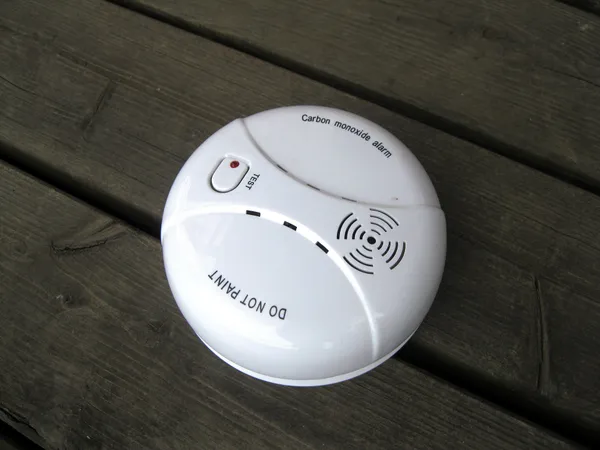
The UK Chief Medical Officers advise against using camping stoves and barbecues indoors, because there is a risk of carbon monoxide poisoning, which can kill. The same goes for petrol or diesel generators. Carbon monoxide has no colour or smell, so you cannot tell it is there. Our carbon monoxide alarms guide explains what to fit and where.
| What you might use | Indoors? | What to do |
|---|---|---|
| Torch or battery lantern | Yes | Be Ready says torches are safer than candles. Keep spare batteries with them. |
| Battery-operated lights | Yes | Scottish Fire and Rescue Service suggests battery-operated lights or torches as an alternative light source. |
| Real candles | Last resort | Use holders on a heat-resistant surface and never leave a lit candle alone. |
| Camping stove or barbecue | Never | Outdoors only. Northamptonshire Fire and Rescue Service says fumes can still be present many hours after use. |
| Petrol or diesel generator | Never | Outdoors only. See the generator section below. |
| Portable gas heater approved for indoor use | With care | The Chief Medical Officers say to make sure the room is well ventilated. Never leave it unattended. |
| Wood burner or other non-electric stove | With care | The Chief Medical Officers say to make sure the room is well ventilated. |
Do not light a fire indoors unless you have a proper heating appliance for this purpose, and never burn old furniture, pallets, fence panels, rubbish or fuels such as petrol, diesel or lighter fluid. If your home is cold and getting colder, our guide to snow, ice and frozen pipes has more on keeping a cold home safe.
Water
Be Ready says mains water supply to your home could be disrupted during and after power cuts. It recommends 3 litres of drinking water per person per day for 3 days, and says more would be needed for baby formula, medical devices and pets. It also says more is needed for cooking and washing.
Per person, per day, for drinking, according to Be Ready. Extra for formula, medical devices and pets.
Four people for 3 days: 3 litres × 3 days × 4 people. That is drinking water only.
The Chief Medical Officers say that while water from your cold tap is still flowing normally, it remains safe to drink. If the taps stop, use your stored water for drinking first. Our guides to when the water supply is cut and home water storage cover what to store and where else to find water.
Food beyond the fridge timings
The fridge and freezer timings are in our guide to preparing for power cuts. Over several days, the question changes from “is this safe?” to “what do we eat, and in what order?”
Eat in this order. The Food Standards Agency (England, Wales and Northern Ireland) and Food Standards Scotland give the same order:
- Foods that need refrigeration.
- Defrosted frozen food that doesn’t need cooking.
- Room-temperature perishable food, such as bread.
- Room-temperature tinned, bottled and dried food.
Use the cold outside. The FSA says that if the weather is cold, below 8°C, you can store food outside. Keep it clean and dry, out of direct sunlight, protected from animals, in a sealed box.
Defrosted food. The FSA says to use food within 24 hours after it has been fully defrosted. You can freeze food again once cooked, but you can only reheat it once after that.
Higher-risk groups. The Chief Medical Officers say that babies, young children, pregnant or breastfeeding women, older people and people with weakened immune systems should not eat chilled ready-to-eat food, such as pre-packed sandwiches or salads, pre-cooked food and leftovers, after 4 hours without power, even if it has been in the fridge.
Share what you can’t eat. Food Standards Scotland says foods that need refrigeration that you have not had time to eat could be shared with your neighbours if they have been stored correctly.
Cooking
If you have a camping stove or barbecue, use it outside. The Chief Medical Officers say food might take longer to cook, so make sure it is steaming hot and cooked through before you eat it. Sources differ on gas cookers: Be Ready says gas ovens won’t work without power, while the FSA says gas cookers may continue to function. Find out which applies to yours before you need it. Be Ready’s checklist includes food that needs no refrigeration or cooking, so keep some of that back for later in the cut.
Staying informed and in touch
Radio. Be Ready says to keep a battery or wind-up radio and to write down on paper the frequencies of any local or national stations you use. If you can’t find your station, it says to search for stations that are still broadcasting, trying FM and digital. Use our radio finder to find your local stations, and read our guide to emergency broadcasting in the UK for how it works.
Your network operator. Be Ready says to visit your local operator’s website to report a power cut and track updates, and to call 105 for free in England, Wales and Scotland if you can’t report online. In Northern Ireland, call NIE Networks on 03457 643 643.
Phones. Be Ready says mobile phones might stop working if your local mast is affected, that messaging may work even when calls do not, and to use your devices sparingly. Our guide to keeping your phone going has the detail.
Landlines. The government says that corded phones on a digital line only work in a power cut if the router has a battery back-up. Its guidance for communication providers refers to guaranteeing access to emergency services for at least one hour during a power outage for customers who rely solely on a landline.
Emergency SMS. If you are deaf, hard of hearing or speech-impaired, you can text 999, but you need to register first by texting “register” to 999. Do it before you need it.
People who need extra help
Join the Priority Services Register now, not during a cut. In England, Scotland and Wales, Ofgem says you can ask to join if you have reached state pension age, are pregnant or have young children, or are living with a disability or a long-term medical condition, including needing medical equipment that requires a power supply. Be Ready describes it as a free support service. Our Priority Services Register guide explains how.
Be realistic about what it does. SP Energy Networks says being on its register won’t necessarily mean it can restore your power more quickly, but it will try to contact you if it knows of a problem in your area. Ofgem says you will not receive extra payments for being on a register.
In Northern Ireland, nidirect says that if you or someone in your home is dependent on a water supply or electrical equipment for daily care, you can sign up to a Care Register. NIE Networks is one of the providers.
Medical equipment. Be Ready says that if you use medical equipment that needs power, you should make a plan now with your care provider or clinical team about what will happen in a power cut. It says the same for personal alarms and health monitors: ask the provider how they work in a power cut.
Medicines that need a fridge. The NHS says short-acting insulin kept out of the fridge for longer than the recommended time may not work properly. Ask your pharmacist or diabetes nurse before the cut, not during it.
If a long cut makes you vulnerable. The government’s review of Storm Arwen found that the register did not capture customers who only became vulnerable because of how long they were without power. If you are struggling, say so when you call. SSEN, for example, says customers on its register can claim reasonable costs for alternative accommodation after more than 24 hours without power, and that if a power cut is confirmed to have lasted beyond 48 hours, all customers can claim in the same way as for food and drink. Other operators’ support differs, so ask yours what is available.
Check on your neighbours. Be Ready says to make a plan to check in on neighbours if an emergency happens, particularly if the power goes out, and to agree that if you cannot call, you or another trusted person will visit anyone who might need extra support in person. Our guide to checking on a neighbour has ideas for how.
Running a generator safely
If you already have a generator, or you are thinking of buying one, these are the rules that keep it safe. A generator’s exhaust contains carbon monoxide, which you cannot see or smell.
Run a generator outdoors only. The Health and Safety Executive for Northern Ireland (HSENI) says not to use a generator indoors or in partially enclosed spaces, including homes, garages and crawl spaces, even those areas with partial ventilation. A shed or a porch may count as a partly enclosed space too. Using fans will not prevent carbon monoxide building up in the home.
Where to put it
- Outside, and a good way from the house. The UK Chief Medical Officers’ advice for a national power outage says to place it outdoors at least 6 metres (20 feet) away, with the exhaust facing away from windows or doors. HSENI says not to run it near open doors and windows.
- Protected from rain. HSENI says to keep it out of standing water and to keep flammable materials away from it.
- With alarms inside. HSENI says to install battery-powered carbon monoxide alarms inside your home. Our carbon monoxide alarms guide says which to buy.
- Never unattended. The Chief Medical Officers say never to leave a generator unattended and to keep a fire extinguisher nearby.
This diagram in words
A house on the left has a battery carbon monoxide alarm inside. On the right, a generator stands outdoors, at least 6 metres or 20 feet away, with its exhaust facing away from windows or doors.
Connecting it
- Plug appliances into the generator, not the house. HSENI says to connect the generator to appliances with heavy-duty extension cords, and warns that connecting the generator to your home could cause a surge in electricity that might result in injury or death to you or your family. Never plug it into a house socket to power the home.
- To power your home’s circuits, use a changeover switch fitted by a registered electrician. A changeover switch lets the house take its power from the mains or the generator, never both at once. In Northern Ireland, NIE Networks’ connection policy says all standby generators must be connected through a changeover switch, and that these are “break before make” devices. Our fuse box guide explains what a registered electrician is and how to find one.
Fuel
HSENI says to fuel a generator outside, to turn it off and let it cool before refuelling, and not to store fuel in your house. In England, Scotland and Wales, HSE says you can keep up to 30 litres of petrol at home without telling anyone, in plastic containers of up to 10 litres, metal containers of up to 20 litres, or one demountable fuel tank of up to 30 litres, and never in living accommodation. In Northern Ireland the limits are lower: HSENI says up to two metal containers of 10 litres, or two approved plastic containers of 5 litres, in a domestic garage, and never in the home.
What to look for if you are buying one
Choose by specification, not by name.
- Rated output in watts. Add up the running watts of everything you want to power. The Centre for Sustainable Energy gives averages of about 300 W for a fridge-freezer and 10 W for a broadband router, so those two together are 300 + 10 = 310 W while running. Check the label on your own appliances.
- Starting watts. A manufacturer explains that some appliances need a much larger burst of power for a very short time when they switch on. The generator needs to cover that, so choose one rated well above your running total, and ask your fridge’s maker for its starting figure.
- Enough sockets for what you plan to run.
Spare petrol, a safe outdoor spot and the cables to reach your appliances are part of the cost, so count them in.
When the power comes back
The power coming back is not quite the end of the cut.
- Switch on gradually. SP Energy Networks says to turn your appliances back on one at a time. SSEN says to leave a light on so you know when the power returns. Be Ready says to turn off items such as irons, ovens, electric fires and fryers. It also says to unplug your TV and PC, as they can be damaged if there is a surge when power goes back on. In Northern Ireland, NIE Networks says to unplug electrical items during a cut and to fit surge protection to sensitive appliances such as computers and televisions.
- Check the fridge and freezer. Use the timings in the preparing for power cuts guide. If in doubt, throw it out.
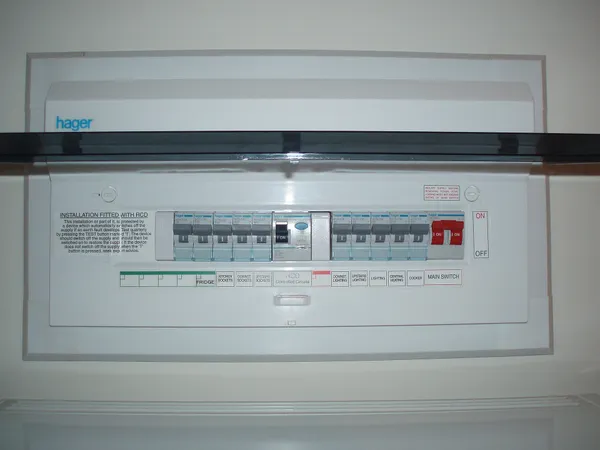
- Check the fuse box. If a switch has tripped, our fuse box guide explains how to reset it, and when to stop and call a registered electrician.
- Check the boiler. A boiler maker says that if the display is off, a power cut may have turned its settings off: check the main fuse box and turn the boiler switch on. If it shuts down for safety (a lockout), follow the manual to reset it. A boiler maker says that if lockout happens often, you should contact your installer or a service engineer.
- Keep away from fallen lines. Be Ready says to keep away from hazards such as power lines, because electricity at high voltages can jump gaps with no warning. SSEN says never to touch an overhead line, even if it has fallen, and not to assume it is dead. Call 105 (03457 643 643 in Northern Ireland) to report damage. SSEN says to call 999 if it is a safety emergency.
- Solar panels and batteries. Be Ready says that some solar and battery installations can keep providing power in a cut if they are designed and configured to run independently of the grid. Ask your installer about yours.
Our preparing for power cuts guide covers compensation after a long cut.
Troubleshooting
Only my home is off
Check whether your neighbours have power. Our fuse box guide explains what to check in your home. If your neighbours are off too, report the cut to your network operator.
The cut has gone on longer than the estimate
Estimates are estimates: Ofgem found that in Storm Arwen, 28% of customers were given a restoration time that was not within 24 hours of the actual time. Check your operator’s website again, and ask what support is available. Ofgem found it was not always clear what support was on offer, and says operators should make clear what help, such as accommodation and hot meals, they provide.
I can’t get through to 105
Ofgem found that in Storm Arwen many customers found it very difficult to reach their operator by phone. Report the cut on your operator’s website instead, if your phone has signal. If not, ask a neighbour on a different mobile network, or try a text message to someone who can report it for you.
I’m not sure whether the food is safe
Start with the timings in the preparing for power cuts guide. The British Red Cross says that if a cut lasts more than four hours you should check refrigerated food carefully, and that food which needs refrigeration should be thrown away if it has been above 8°C for too long. When in doubt, throw it out.
The boiler won’t restart
Check the display and the fuse box first. If resetting doesn’t help, contact a registered gas engineer.
Someone in the house relies on medical equipment
Follow the plan you agreed with their care team. Report the cut to your network operator on its website or by calling 105 (03457 643 643 in Northern Ireland). In an emergency, call 999.
Sources
- Be Ready: Power cuts
- Be Ready: Be ready for emergencies
- Ofgem: Final report on the review into the networks’ response to Storm Arwen, June 2022
- Energy Emergencies Executive Committee (BEIS): Storm Arwen review final report, June 2022
- Ofgem and GHD: Storm Arwen technical review, main report
- Be Ready: Phone and broadband outages
- Met Office: Rare red weather warning issued for Storm Arwen, 26 November 2021
- GOV.UK, UK Chief Medical Officers: Keeping warm or cool in extreme weather, scripts for broadcast media
- GOV.UK, UK Chief Medical Officers: Water and sanitation, scripts for broadcast media
- HSENI: Safety tips, using a portable generator in an emergency
- NIE Networks: Low voltage service termination and metering requirements, Policy 09/024
- Centre for Sustainable Energy: How much electricity am I using?
- Bluetti: Running watts vs starting watts (how a product works only)
- HSE: If you store petrol at home
- HSENI: Petrol
- Food Standards Agency: Food safety in a power cut, advice for consumers
- Food Standards Scotland: Food safety during a power cut
- GOV.UK, UK Chief Medical Officers: Food and nutrition, scripts for broadcast media
- Food Standards Agency: How to chill, freeze and defrost food safely
- UKHSA: Top tips for keeping warm and well this winter
- Public Health Agency (Northern Ireland): Keeping warm at home during cold weather
- NHS: Hypothermia
- NHS: Sudden infant death syndrome (SIDS)
- NHS: Storing and travelling with short-acting insulin
- NHS: Carbon monoxide poisoning
- Scottish Fire and Rescue Service: Power cuts
- Ofgem: Join your supplier’s Priority Services Register
- Ofgem: Check if you can get a payment after a power cut
- nidirect: Care registers
- SP Energy Networks: Priority Services Register
- SSEN: Support available during a prolonged storm
- SSEN: What to do during a power cut
- SSEN: Overhead lines
- SP Energy Networks: What to do in a power cut
- NIE Networks: Power cut advice
- Utility Regulator (Northern Ireland): Supplier contact information
- DSIT: Communication providers, ensuring telecom services are resilient
- British Red Cross: What to do in a power cut
- Northamptonshire Fire and Rescue Service: Barbecues
- Be Ready: Cold weather, snow and ice
- DHSC and DSIT: Telecare national action plan
- Vaillant: No hot water? What to check
- Baxi: How to reset a Baxi boiler
- Photo: terraced houses at dusk, Nick Nice, Unsplash